
Wednesday, June 18, 2014

Wednesday, May 21, 2014
Roots and Wings Family Farm Recipe for Garlic Scapes
It is almost GARLIC SCAPE SEASON! Let's celebrate this joyous time with a little recipe from a local farm in Cherry Creek, NY. Check out the farm's website here.
 |
| GARLIC SCAPES!!!!! |
Grilled Garlic Scapes from Roots and Wings Family Farm
1. Toss garlic scapes in olive oil, salt, and seasonings.
2. Wrap loosely in tin foil and place over the grill or at the edge of your camp fire.
3. Roast until tender (10-15 min) depending on how hot your grill or fire is.
4. Enjoy!
Monday, May 19, 2014
Green Cleaning Supplies: Do It Yourself
Ever wonder what's in Windex? Or perhaps in your toilet cleaner, sink cleaner, shower curtain cleaner, counter cleaner, tile cleaner, wood cleaner, drain cleaner, linoleum cleaner, dish and clothing detergent? No?
 |
| Do you know what's in here?... Do you WANT to know what's in here? |
Here in the states, cleaning products (in fact, ALL of our PRODUCTS including personal care products, medicines, childrens' toys, and even our food) follow the super logical, morally-incorrupt principle of "Innocent Until Proven Guilty". This means that chemicals used in the production and synthesis of our products do not undergo rigorous, unbiased testing for the sake of the consumers health.
What is the Gleaning Project's reaction to this? BOYCOTT!!! I know it may be hard for our consumer-based society to wrap our brains around this idea, but believe me, it's for our own good!
So put down that toxin-laden sponge and squirt bottle full of mysterious blue liquid, and pick up a rag, a bottle of vinegar, a box of baking soda, and hey, why not an apron? Let's get started.
Here are some go-to recipes for all-around the house cleaning.
P.S. You can purchase Borax (a mined mineral) essentially at any grocery store and it is super cheap and lasts for a long time.
Scouring Powder
- 1 C baking soda
- ¼ C borax
- Drops of essential oil (optional)
In a bowl,
mix the borax and baking soda with a few drops of essential oil.
Store in a shaker and shake onto that pesky soiled surface slated for
cleaning.
All-Purpose Cleaner
- A spray bottle (if you don't have an empty one, just go to the dollar store and pick one up)
- 1 cup apple cider vinegar
- 1/2 cup water
- 10-20 drops of essential oil (if you'd like, I use lemon or peppermint)
Put the lime in the coconut and mix it all up. Meaning, just mix it all together in the spray bottle.
Alice’s Wonder Spray
- 2 t borax
- 32 oz. hot water
- ¼ C white vinegar
- 20 drops essential oil (optional)
- ¼ C liquid dish soap (look for a biodegradable, non-petroleum based product from a company above. We used Dr. Bronners Castile soap. Find it in Tops’ natural cleaning section.)
Dissolve
borax in hot water. Add to a 32-oz spray bottle along with the
vinegar and water. Then add the liquid dish soap and essential oil
(optional). Shake it up and apply to sinks, tubs, tiles and floors.
 |
| What cleaning your drain looks like at the molecular level |
Drain Cleaner
- Baking Soda
- Apple Cider vinegar
Fill your drain with baking soda. Pour down apple cider vinegar. Watch the magic happen. If you need to, take a plunger to your drain (it helps!).
Monday, May 12, 2014
Beans, Beans, They're Good For Your Heart... And They're Also Super Easy to Grow!
mmmmm...beans. They are quite literally one of my favorite foods <3 and most versatile veggie. You can saute them fresh in a stir fry, add them to a soup, dry them and make curry, chili, southwestern bean salad, or stuff them up your nose if you are a one year-old.
Fortunately for us, they are also ridiculously easy to grow (and I'm hoping most of us have matured to the point where we don't care for sticking miscellaneous objects up our noses)! Which brings me to the subject that I'd like to talk with you about, and that is...
So, truth is, is that I just got back in from planting beans (and peas) and completely forgot to take pictures that I wanted to show everyone! Argh, life, don't I have it hard? Anyway!! Today was a great day to plant them because it's about to raaaaaaain! Why is this good? I will explain if you continue reading... if you give up on this blog post then you are a lost cause and NO BEANS FOR YOU!
I like bullets and numbers. I'm assuming you like bullets and numbers. SO>>> Here is a 'how to' guide to planting beans using bullets AND numbers!
 |
| Bean plants growing in our Cornerstone garden in Dunkirk. |
TODAY IS THE DAY WE PLANT BEANS FOR THE SOUP KITCHEN!!!!!
and then blog about it ^_^ mwhahahahaSo, truth is, is that I just got back in from planting beans (and peas) and completely forgot to take pictures that I wanted to show everyone! Argh, life, don't I have it hard? Anyway!! Today was a great day to plant them because it's about to raaaaaaain! Why is this good? I will explain if you continue reading... if you give up on this blog post then you are a lost cause and NO BEANS FOR YOU!
 |
| Heirloom variety of beans gleaned from Greystone Nature Preserve in Brocton, NY. |
I like bullets and numbers. I'm assuming you like bullets and numbers. SO>>> Here is a 'how to' guide to planting beans using bullets AND numbers!
HOW TO PLANT BEANS (for dummies, or post-graduate students, or mothers, or over-ambitious, plant-killing fathers, or children who decide that their noses are in fact NOT a grand place to grow beans)
- 1. Get yo' beans. We glean all our beans from local, organic farms and nature preserves who let their extra beans go to seed. Here at the Gleaning Project, we then have volunteers shuck the thousands of beans picked. Beans that we don't plant are distributed throughout the county to food pantry, soup kitchen, community, and personal gardens.
- 2. Soak yo' beans. It's good to let your beans soak in water for at least two hours before planting. This loosens up the skin and re-hydrates your sad, little parched bean friends.
- 3. While your beans are soaking; Prep yo' soil! Loosen up the soil with a hoe (or whatever) and draw lines with the end of the hoe (or whatever) about 2-inches deep and 8-inches apart.
- 4. Plant yo' beans. Drop your beans into the little baby trenches 6 to 8-inches apart then gently cover them with about 1.5-inches of soil.
- 5. Water yo' beans. Soak 'em. Like, super soak them. Soak them so much that you find yourself on the edge of an existentially crisis. Only then will you achieve inner peace, I mean, have your beans successfully planted.
TADA! Now get out and PLANT THOSE BEANS!!!!!
You have until late June...
now GO!
Wednesday, May 7, 2014
Prepping the Soil for Planting
Happy May Everyone!!!! No snow, no frosts, no winter jacket, no digging out the car, and oh! Did I mention NO SNOW!??? I have been happily riding my bicycle to work nearly everyday and loving it. ^_^
Okay, now let's get down to business. I'm here to talk about the gardens and what I (personally) have been doing to prep them for planting this season. This is the "Hannah Approved" method that requires no tiller, no black plastic covers,no sweat inducing/blister causing labor, and yields magnificent results!
You may be asking, "Why bother improving the soil? Isn't soil just soil?" Answer: NO, IT'S NOT, Duh. Well, we can leave out the 'duh' I guess. If your soil isn't healthy, then your plants will not be healthy and consequently, you will not be healthy.
Soil needs a balance of vitamins and nutrients (just like humans!) for your veggies and fruits to thrive. In addition to this, it also needs plenty of worms; My favorite little environmental engineers that work dutifully to break down the organic materials in the soil and turn it into super, uber, rich poop that the plants absolutely love.
Also! It's important to remember that different plants need different nutrients (which is why we practice crop/bed rotation). As an example, plants from the Nightshade Family (Tomatoes, Potatoes, Eggplant) are greedy for potassium while most herbs do not care for nitrogen-rich soil.
Here are some common plants categorized by whether or not they are heavy or light feeders, or soil improvers to help out with your garden planning.
Heavy Feeders: Asparagus, beets, broccoli, brussels sprouts, cabbage, cauliflower, celery, collards, corn, kale, kohlrabi, lettuce, parsley, potatoes, spinach, squash, tomatoes.
Light Feeders: Carrots, garlic, leeks, mustard, onions, parsnip, peppers, radishes, rutabagas, shallots, Swiss chard, turnips.
Soil Improvers: Beans, beans, and beans.
***As a note before we begin! The following method is difficult if you are starting up a large new garden (and breaking into new ground)! And if this is your first time gardening, I recommend starting small so your not overwhelmed!
There is SO MUCH MORE that I could talk about when it comes to the soil (because soil SERIOUSLY is the MOST important part of the garden... ever). But because I am limited by your attention span, I will refer you to the book "Start with the Soil" by Grace Gershuny. She gives a good (and very in-depth) overview of soil and how you can improve yours.
 |
| My friend Amanda and pretending to be happy with snow on Mardi Gras in Buffalo. |
Okay, now let's get down to business. I'm here to talk about the gardens and what I (personally) have been doing to prep them for planting this season. This is the "Hannah Approved" method that requires no tiller, no black plastic covers,
 |
| WORMS... and their poop (castings is the correct term :) |
Soil needs a balance of vitamins and nutrients (just like humans!) for your veggies and fruits to thrive. In addition to this, it also needs plenty of worms; My favorite little environmental engineers that work dutifully to break down the organic materials in the soil and turn it into super, uber, rich poop that the plants absolutely love.
 |
| General 4-year layout that is easy to follow and keeps your gardens' soil healthy. |
Here are some common plants categorized by whether or not they are heavy or light feeders, or soil improvers to help out with your garden planning.
Heavy Feeders: Asparagus, beets, broccoli, brussels sprouts, cabbage, cauliflower, celery, collards, corn, kale, kohlrabi, lettuce, parsley, potatoes, spinach, squash, tomatoes.
Light Feeders: Carrots, garlic, leeks, mustard, onions, parsnip, peppers, radishes, rutabagas, shallots, Swiss chard, turnips.
Soil Improvers: Beans, beans, and beans.
How to Improve Your Soil
In three simple steps...
 |
| Our Porter Ave. garden this spring after we flipped, added manure, and chopped up the soil. |
1.With a shovel, flip the soil in large chunks so that the grasses and weeds growing on top now are on the bottom.
2. After flipping ALL of the soil, add your soil amendments! I use manure and compost, but you can use fish meal, seaweed, worm castings, fallen leaves, saw dust, peat moss, etc....
3. With a hoe, chop up and mix your soil and fertilizer until it looks ready to be planted in!
 |
| Garlic!!!!!!!! |
Easy as that! The only flaw in this method is that it requires A LOT of work, but it is well rewarded with a beautiful crop during harvest season.
This is the poor-mans method, requiring no expensive machinery, fertilizers, or covers.
There is SO MUCH MORE that I could talk about when it comes to the soil (because soil SERIOUSLY is the MOST important part of the garden... ever). But because I am limited by your attention span, I will refer you to the book "Start with the Soil" by Grace Gershuny. She gives a good (and very in-depth) overview of soil and how you can improve yours.
Good luck and happy gardening!
-Hannah
Friday, April 18, 2014
Kitchen Composting
A super simple guide to composting your kitchen scraps at home!
 |
| Steve with a mixture of poop and compost. |
Now, if you're like me and you have a tendency to throw your cooking scraps on the side of the house in a raccoon infested neighbored, then Good Luck! But if you live in a place without coons and perhaps only the occasional brave possum that enjoys knocking over your garbage can, then you should be fine!
Home Composting
 |
| A wooden-flat compost bin. |
Composting is a great way to turn your kitchen and yard waste in a valuable resource for your garden, or someone else's! First things is first; Create a compost pile in a bin, hole in the ground, or other isolated area of your yard. To keep varmints out, place a wooden flat or tight mesh chicken wire over the hole.
If you are using a composting bin. make sure to keep the lid on tight, unless you want your compost growing legs and leaving you, only to return in the form of digested goop.
**Digging about a 2-ft deep by 4-ft wide hole for a composting area is my favorite way to do it because if you need to expand your compost bin, all you have to do is dig a little more!
I like to think of composting as making a delicious and moist layer cake. Complete with sprinkles, frosting,
 |
| mmm...cake. |
Here are some examples of green and brown goodies to fill your compost cake with:
Greens
- Vegetable and Fruit Scraps

An assortment of acceptable greens for your compost. - Grains, Pasta, Bread (without a ton of oil or butter on it)
- Grass Clippings
- Fresh Manure
- Coffee Grounds
- Tea Bags
- Hedge Trimmings and Weeds
- Seaweed
- Feathers
- Plant Cuttings
- Hair (try to avoid dyed hair)
 |
| Straw is a great material for the compost. |
Browns
- Dead Leaves
- Hay and Straw
- Newspaper and Cardboard
- Woody Tree Trimming Scraps
- Eggshells
- Corn Cobs
- Sawdust
- Paper napkins and towels
 |
| Some bones are great... for dogs. |
Things that you should never, ever, EVER even think about putting in your compost pile.
- Meat (cows, fish, pigs, chickens)
- Cheese
- Butter
- Diseased Plants
- Oily Foods
- Milk Products
Having your own compost is necessary for garden health and in return, your own personal health!
Wednesday, April 16, 2014
10 Reasons to Buy Local
Although there are limitless reasons to buy local, let's start with the top 10.
 |
| Fredonia Farmers' Market |
 |
| Photo courtesy of Thomas Annear |
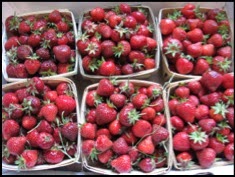
2. Local produce is better for you. The shorter the time between the farm and your table, the less likely it is that nutrients will be lost from fresh food.
4. Local food is safe. There's a unique kind of assurance that comes from looking a farmer in the eye at farmers market or driving by the fields where your food comes from. Local farmers aren`t anonymous and they take their responsibility to the consumer seriously.
3. Local food preserves genetic diversity. In the modern agricultural system, plant varieties are chosen for their ability to ripen uniformly, withstand harvesting, survive packing and last on the shelf, so there is limited genetic diversity in large-scale production. Smaller local farms (such as Gong Garden and Toboggan Hill Farm) , in contrast, often grow many different varieties to provide a long harvest season, in an array of colors and flavors.
 |
| A mixture of heirloom tomatoes. |
5. Local food supports local families. Wholesale prices that farmers get for their products are low, often near the cost of production. Local farmers (such as Margaret and Gary from Roo Haven Farm) who sell directly to consumers cut out the middleman and get full retail price for their food, which helps farm families stay on the land.
6. Local food builds community. When you buy direct from a farmer, you are engaging in a time-honored connection between eater and grower. Knowing the farmer gives you insight into the seasons, the land, and your food. It gives you access to a place where your children and grandchildren can go to learn about nature and agriculture.
 |
| A couple of cheerful vendors at the Fredonia Farmers' Market |
7. Local food preserves open space. When farmers get paid more for their products by marketing locally, they are less likely to sell their farmland for development (or to large growers that come in and plant GMO corn). When you buy locally grown food, you are doing something proactive to preserve our agricultural landscape.
8. Local food keeps taxes down. According to several studies, farms contribute more in taxes than they require in services, whereas most other kinds of development contribute less in taxes than the cost of the services they require.
9. Local food benefits the environment and wildlife. Well-managed farms conserve fertile soil and clean water in our communities. The farm environment is a patchwork of fields, meadows, woods, ponds, and buildings that provide habitat for wildlife.
10. Local food is an investment in the future. By supporting local farmers today, you are helping ensure that there will be farms in your community tomorrow.
Adapted from With an Ear to the Ground by Vern Grubinger, published by Northeast Region SARE, 2004.
Subscribe to:
Posts (Atom)